Slow FIRE: Why reaching financial independence in 15 years may be healthier than doing it in 5
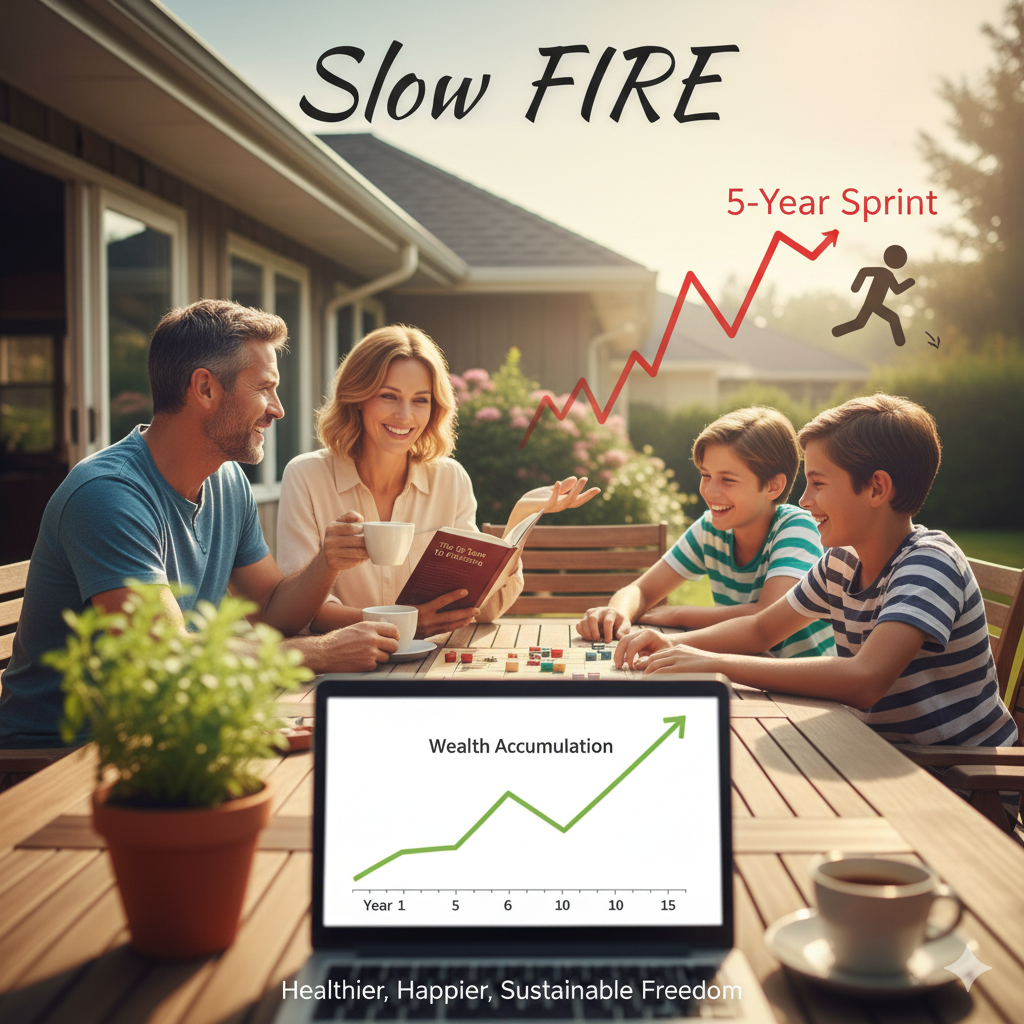
The FIRE movement (Financial Independence, Retire Early) has inspired millions of Americans to rethink how they approach money, work, and retirement. By aggressively saving and investing, some people aim to retire decades earlier than the traditional retirement age.
But not everyone pursuing FIRE wants to sprint toward independence at maximum speed.
In recent years, a growing number of people have embraced a different strategy known as Slow FIRE. Instead of trying to achieve financial independence in five to seven years through extreme savings and minimal spending, Slow FIRE followers aim for a longer timeline; often around 10 to 15 years.
At first glance, that might sound less impressive. But for many people, it turns out to be far more sustainable and healthier in the long run.
What Slow FIRE actually means
Slow FIRE doesn’t change the core idea of financial independence. The goal is still to build enough investments, often through accounts like a 401(k), IRA, and taxable brokerage account; to eventually cover living expenses.
The difference lies in the timeline and lifestyle balance.
Instead of pushing savings rates to extreme levels like 60% or 70% of income, Slow FIRE followers might aim for something closer to 20% to 35%.
That approach still builds wealth consistently, but it allows more flexibility for enjoying life along the way.
For many Americans, this middle ground makes the FIRE journey feel much more realistic.
The mental pressure of extreme FIRE timelines
Achieving financial independence in just a few years usually requires very aggressive financial habits.
People pursuing ultra-fast FIRE often:
- Max out retirement accounts immediately
- Save most of their income
- Avoid discretionary spending
- Live far below their earning capacity
- Delay many lifestyle choices
While this strategy can work for some individuals, it can also create significant psychological pressure.
When every dollar is treated as a missed investment opportunity, normal life expenses can start to feel like failures.
Over time, that mindset can lead to burnout.

The risk of burnout during the FIRE journey
Burnout isn’t limited to work environments. It can also appear during long-term financial goals that require strict discipline.
When someone tries to compress the FIRE timeline into just five years, the lifestyle adjustments can be intense.
Examples might include:
- Avoiding vacations for years
- Saying no to most social spending
- Working multiple side hustles
- Constantly optimizing budgets and investments
While these strategies can accelerate wealth building, they may also reduce overall quality of life during the process.
Slow FIRE attempts to reduce that pressure by creating a longer and more flexible path to independence.
Why a 15-year timeline can be more sustainable
A longer FIRE timeline offers several advantages beyond financial growth.
More lifestyle balance
When savings goals are less extreme, people have more room to spend money on things that genuinely matter to them; travel, hobbies, experiences, or family time.
This balance can make the journey toward financial independence feel less like a sacrifice and more like a lifestyle shift.
Reduced financial anxiety
Constantly tracking every dollar can create anxiety for some people. Slow FIRE allows for a structured savings plan without turning personal finance into a daily source of stress.
Room for career growth
A five-year FIRE plan often requires maximizing income immediately.
A 15-year timeline allows for natural career development, promotions, and skill building. Higher income over time can dramatically increase investment contributions without requiring extreme frugality.
The power of consistent investing
One of the biggest reasons Slow FIRE works well is that compound growth still does most of the heavy lifting.
Consistently investing in diversified assets (such as index funds through a 401(k) or brokerage account) allows investments to grow steadily over time.
Even modest contributions can become significant when compounded for more than a decade.
For example, someone who invests consistently for 15 years benefits from market growth, reinvested dividends, and increasing contributions as income rises.
This combination can build a substantial portfolio without requiring an extreme savings rate.
The social benefits of a slower approach
Another overlooked advantage of Slow FIRE is the social flexibility it allows.
When financial goals require extremely strict spending limits, people may feel disconnected from friends or family members who have different financial habits.
A slower timeline makes it easier to maintain social relationships without constantly declining invitations or activities.
This balance can reduce the social isolation that sometimes appears in aggressive FIRE strategies.
Building financial habits that last
Slow FIRE also focuses on creating long-term financial habits, not short-term sacrifices.
Instead of relying on extreme discipline for a few years, individuals develop sustainable behaviors such as:
- Regular investing
- Avoiding lifestyle inflation
- Increasing savings as income grows
- Keeping housing and transportation costs reasonable
These habits often continue even after financial independence is achieved.
The result is not only early retirement but also long-term financial stability.
Financial Independence isn’t a race
One of the biggest lessons many FIRE followers eventually learn is that financial independence is not a competition.
Reaching the goal slightly later doesn’t reduce its value.
For some people, the fastest route to FIRE is exciting and motivating. But for others, it creates unnecessary stress and lifestyle restrictions.
Slow FIRE recognizes that personal finance is deeply connected to mental health, relationships, and life satisfaction.
Taking a slightly longer route can make the journey more enjoyable; and more sustainable.
The Real Goal of FIRE
At its core, the FIRE movement isn’t really about retiring early.
It’s about gaining control over your time and choices.
Some people achieve that control in five years through extreme savings. Others reach it in fifteen years with a more balanced lifestyle.
Both approaches can lead to financial independence.
But for many people, Slow FIRE offers something equally valuable: the ability to build wealth without putting life on hold in the process.
| Factor | Fast FIRE (5–7 Years) | Slow FIRE (10–15 Years) |
|---|---|---|
| Savings Rate | Usually 50%–70% of income | Usually 20%–35% of income |
| Lifestyle Flexibility | Very limited discretionary spending | More balanced spending and saving |
| Mental Stress | Can be high due to strict budgeting | Lower pressure and easier to sustain |
| Career Pressure | Often requires maximizing income quickly | Allows gradual career growth |
| Social Life | May require skipping many social activities | Easier to maintain normal social habits |
| Investment Timeline | Shorter time for compound growth | Longer compounding period |
| Burnout Risk | Higher due to extreme discipline | Lower because the approach is more balanced |
| Long-Term Goal | Reach financial independence as fast as possible | Reach financial independence while maintaining quality of life |
FAQs
1. What is Slow FIRE?
Slow FIRE is a financial independence strategy that aims for a longer timeline—often around 10 to 15 years—while maintaining a balanced lifestyle.
2. Is Slow FIRE less effective than aggressive FIRE?
Not necessarily. A longer timeline still allows investments to grow through compound returns while reducing financial pressure.
3. What savings rate is typical for Slow FIRE?
Many Slow FIRE followers aim to save between 20% and 35% of their income, though the exact rate varies.
4. Does Slow FIRE still involve investing in retirement accounts?
Yes. Strategies often include maximizing tax-advantaged accounts like 401(k)s and IRAs, along with additional investments.
5. Can Slow FIRE still lead to early retirement?
Of course. Even with a longer timeline, many people pursuing Slow FIRE still retire significantly earlier than traditional retirement ages.
The information provided in this article is for informational and educational purposes only and does not constitute financial, legal, or investment advice. While efforts are made to ensure accuracy, Retire ASAP makes no guarantees regarding completeness or applicability to individual circumstances. Readers are encouraged to consult a qualified professional before making any financial decisions.